

THE KNIGHTS HOSPITALLERS
IN BUCKINGHAMSHIRE
BULSTRODE
Bulstrode, near Gerrards Cross in Buckinghamshire, was an ancient medieval estate set within a wooded landscape of scattered farms, manors and heathland around Chalfont Heath. In the Middle Ages the original manor appears to have been divided into two parts: Bulstrode manor itself, associated with a medieval deer park, and Temple Bulstrode, the western portion of the estate, which became linked with the Knights Templar.
Temple Bulstrode was held by the Knights Templar by the thirteenth century and is believed to have been centred on the moated site now known as Moat Farm, on Hedgerley Lane. The remains of an early fourteenth-century building survive within the moat, and the site is now protected as a Scheduled Monument. This suggests that the Templars’ holding here was not simply farmland, but included a substantial manorial or administrative building within a defended or enclosed moated complex.
The exact donor of Bulstrode to the Templars is uncertain. The surviving records are brief, and the history of the manor is described as confused. What is clear is that the Templars held a small estate in Chalfont St Peter as part of their manor in Hedgerley from the early thirteenth century. Their possessions in Buckinghamshire also included lands at Radnage and High Wycombe.
The preceptory at Bulstrode is known to have existed by 1276, when Brother John, described as preceptor, was accused of taking a bribe of half a mark from a robber in order to let him go free. This is one of the few surviving references to an individual Templar connected with the site, but it confirms that Bulstrode had an organised Templar presence and a local officer in charge.
After the suppression of the Knights Templar in the early fourteenth century, their lands passed to the Knights Hospitaller. An inquisition of 1330 recorded that the manor of Bulstrode had once belonged to the Templars and had then passed to the Hospitallers. It was again listed among Hospitaller lands in 1338, although Bulstrode did not become a Hospitaller commandery. Instead, the manor was leased out on their behalf and valued at 75 marks per year.
At the Dissolution, the former Templar and Hospitaller lands in Chalfont St Peter and Hedgerley passed out of religious ownership and were conveyed to Robert Drury. Today, the most important surviving reminder of the medieval estate is the moated site at Moat Farm, believed to mark the centre of Temple Bulstrode. Although little now remains above ground, the protected earthworks and buried archaeology preserve the memory of a once-important Templar manor in the Buckinghamshire landscape.
Temple Bulstrode therefore offers a rare glimpse into the quieter, rural side of the military orders in medieval England. Away from the crusading frontiers of the Holy Land, estates such as Bulstrode provided income, agricultural produce and local administration, helping to support the wider religious and military work of the Templars and, later, the Hospitallers.
BUCKINGHAM -
The Knights Hospitallers in Buckingham: St John's Hospital and Chapel
Tucked within the historic heart of Buckingham lies a quiet but remarkable piece of medieval heritage — the site of St John’s Hospital for the Poor, established in the late 12th century.
Originally founded as a charitable hospital, the institution evolved over time as it passed through the hands of powerful churchmen. By the 13th century, it was under the control of Matthew de Stratton, then Archbishop of Buckingham. He later granted the property to the Master of the Order of St Thomas of Acon, who converted the hospital into a chapel and chantry, serving both religious and charitable purposes.
In 1289, the chapel’s fate took another turn when it was officially transferred to the Knights Hospitallers — a military and religious order dedicated to caring for the sick and poor. Alongside the chapel, the Hospitallers were granted 160 acres of land, strengthening their presence and influence in the region.
Today, the 12th-century chapel still stands as a testament to centuries of service, faith, and transformation. Its southern doorway is original, and later medieval additions remain visible in the architecture. For many years, the building served the town as the Latin School, continuing its legacy of learning and community service.
In modern times, part of the original chapel and chantry has come under the care of the National Trust, while the remainder forms part of a private residence. Together, they preserve the memory of the Knights Hospitallers and their enduring role in the story of Buckingham.


HOGSHAW -
The Knights Hospitallers and the Manor of Hogshaw
Just north of Quainton, in the Buckinghamshire countryside, lies the fascinating — though now mostly hidden — legacy of the Knights Hospitaller at Hogshaw. Once home to a thriving medieval community and a significant religious outpost, Hogshaw was the site of a Hospitaller Commandery, also known as a preceptory, and a centre for administration, farming, and worship.
Origins of the Commandery
The Manor of Hogshaw, located just 1.5 miles north of Quainton’s Church of St Mary (for which the Hospitallers also held the advowson, or right to appoint clergy), was granted to the Knights Hospitaller during the reign of Henry II by William Peverel. The manor, comprising approximately 350 acres of land and including a dovecote, soon became the foundation for a commandery.
At the heart of this site was the Church of St John the Baptist, serving both the medieval village of Hogshaw and the small resident community of Hospitaller knights. This church formed part of the original endowment to the Order and played a key role in the religious and social life of the area.
The Decline and Remains
By the late 17th century, the village and church had fallen into decline. By 1681, the church was only partially standing, and the last recorded burial took place in 1683. Within fifty years, the building was demolished. According to Ordnance Survey maps from 1885, the site of the former church is linked to a building known as the Ox House, where human remains and architectural fragments — including a possible window mullion — have been found.
The Ox House, although largely of brick construction, sits on dressed limestone footings, suggesting reused materials from the demolished church. Though its orientation differs from a traditional church layout, it is believed to stand near or partly on the original church site. A font from the church, once used as a water trough and later a flower pot, now resides in the Museum of the Order of St John in London.
A Scheduled Monument Today
Today, the site of the Hogshaw Commandery is protected as a scheduled monument, preserving a unique landscape of medieval remains. These include:
-
A moated enclosure of the former preceptory (52m by 40m) with a moat roughly 11m wide.
-
Two fishponds south of the moat, once used for sustainable food production by the Hospitallers.
-
Buried remains of the Church of St John the Baptist and associated buildings.
-
Earthworks and ditched enclosures believed to represent the layout of the medieval village.
-
Traces of a former hollow way — an earlier route of the Claydon Road.
Remnants of the commandery can still be traced near Fulbrook Farm, where the Hospitallers also held lands and influence.
A Forgotten Stronghold of Faith
Though the buildings have long since vanished, the landscape still tells the story of a once-significant outpost of the Knights Hospitaller. Hogshaw stood as a beacon of faith, charity, and rural strength — a place where the spiritual and agricultural missions of the Order shaped the land and the lives of those who lived there.


RADNAGE
LUDGERSHALL -
Nestled in the Buckinghamshire countryside, just twelve miles west of Aylesbury and near the Oxfordshire border, lies the village of Ludgershall—a place with deep medieval roots and a fascinating connection to one of history’s most famous religious military orders: the Knights Hospitallers.
At the heart of Ludgershall stands St Mary’s Church, a medieval parish church with a rich past. It was one of several churches tied to the Commandery of Hogshaw, an estate held by the Hospitallers. This commandery's endowments included churches in Ludgershall, Oving, Addington, Creslow, and Hogshaw itself.
By the mid-13th century, the Knights Hospitallers had gained the advowson of Ludgershall’s church—that is, the right to appoint its priest. This patronage remained with them at least until 1511, and possibly until the Dissolution of the Monasteries under Henry VIII in the 1530s.
In 1291, Ludgershall’s church was valued at just over £6 per year. By 1535, that figure had nearly tripled to over £18, reflecting its growing importance and wealth
The Hospitallers here also held Tetchwick Manor, a nearby hamlet assessed in the Domesday Book at 2 hides of land. This estate was likely granted to them alongside Hogshaw Manor by William Peverel, and later confirmed by King John in 1199.
Historical records mention Henry of Chequers, or de Scaccario, as a tenant under the Hospitallers at Tetchwick, holding one hide of land there.


East Claydon -
T
The Knights Hospitallers in East Claydon
In the 15th century, the Knights Hospitallers received the advowson (the right to appoint the parish priest) of the Church of St Mary in East Claydon, Buckinghamshire. This marked an important connection between the village and one of the most influential religious orders of the Middle Ages.
The Church of St Mary itself is the oldest surviving building in the parish, with its origins clearly visible in the stonework. The chancel dates back to the 14th century, while the robust west tower was added in the 15th century, around the same period the Knights Hospitallers took over the advowson. This transfer would have linked the church directly to the local commandery (or preceptory) at Hogshaw, just a short distance away. Hogshaw served as one of the regional centres for the Hospitallers, managing land, religious affairs, and charitable work in the area.

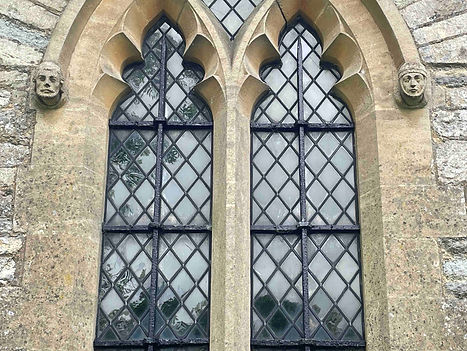
Addington - Church of St Mary
Cholesbury - Church St Lawrence
The Knights Hospitaller at Cholesbury, Buckinghamshire
Cholesbury, a picturesque village in the Chiltern Hills of Buckinghamshire, holds a fascinating medieval heritage linked to the Knights Hospitaller, also known as the Order of St John.
Land Ownership and Ecclesiastical Rights
The manor of Cholesbury was originally held by the le Breton family. In 1091, they transferred control of the land and its income to the Knights Templar. Following the Templars' dissolution in 1312, the manor passed to the Knights Hospitaller as an endowment to their commandery at Hogshaw. This transfer expanded the Hospitallers’ holdings in the region and secured their economic influence in the area.
The advowson of St. Lawrence’s Church, located within an Iron Age hillfort in Cholesbury, is also believed to have been associated with the Hospitallers. Historical records suggest that the church’s proximity to the Hospitallers’ landholdings reflects their ongoing ecclesiastical influence.
Historical Records and Documentation
A local heritage study of the Lords of the Manors, past and present, including Cholesbury, provides valuable insight into the area’s history and the role of the Knights Hospitaller. Additionally, records indicate that after 1416, the Hospitallers were actively involved in appointing resident clergy, demonstrating their continued interest in the village’s spiritual affairs. One such record highlights Joseph Neale’s lectureship at Cholesbury, reflecting the order’s efforts to maintain clerical presence and oversight.
Cholesbury’s Unique Heritage
Cholesbury’s development as a manor by the mid-13th century highlights its regional significance. The Church of St Lawrence, uniquely located within an Iron Age hillfort, stands as one of only two such churches in the Chilterns, offering a rare glimpse into the village’s deep historical roots. The proximity of Cholesbury Camp and the Hospitallers’ holdings provides enduring evidence of the medieval order’s presence and influence in Buckinghamshire.
Today, Cholesbury preserves a remarkable historical legacy through its surviving landmarks and documents, allowing visitors and residents alike to connect with its medieval past and the enduring presence of the Knights Hospitaller.


Creslow - Old Chapel Site
The building began as the parish church, originally held by the Knights Hospitaller, later forming part of the Templars’ or Hospitallers’ manorial holdings at Creslow. It functioned as both chapel and parish church until it fell into disuse after the Reformation
The chapel was eventually demolished—or, more accurately, repurposed—during the English Civil War under Cornelius Holland. Since then, the structure has served secular functions, most recently as a storage building
The chapel likely dates from the 13th century, with architectural details such as two-light windows and chevron carvings suggestive of 12th–13th century origins and later 14th–15th century modifications
Oving -
The Knights Hospitallers in Oving
The village of Oving has a long-standing connection with the Knights Hospitallers, one of the most influential religious and military orders of the medieval period. By 1222, the order held the advowson of All Saints Church, giving them the right to appoint the parish priest. This early association reflects the importance of Oving within the Hospitallers’ local network, likely administered through the nearby commandery at Hogshaw

Quainton -
The Knights Hospitallers in Quainton
Quainton, a picturesque village in Buckinghamshire, holds a rich medieval heritage deeply connected to the Knights Hospitallers, one of the most prominent religious and military orders of the Middle Ages. The advowson of the parish church — St Mary and the Holy Cross — belonged to the nearby commandery at Hogshaw until 1223, signifying the Hospitallers' early ecclesiastical influence in the village.
The Church of St Mary and the Holy Cross, as seen today, owes much of its structure to the efforts of the Hospitallers, who are credited with its rebuilding around 1340. This work likely followed a period of decline and marked a renewal of religious life in the parish under the guidance of the order.
Quainton is also home to the remains of a 15th-century preaching cross, believed to have been erected by the Knights Hospitaller on the village green. While only the base and part of the shaft survive, this historic monument would once have served as a public pulpit for open-air sermons and religious instruction.
The village's historical name, Quainton Malet, reflects its long association with the Malet family, lords of the manor from the Norman Conquest in 1066 until approximately 1348. Notably, at least one member of the Malet family is recorded as having joined the Crusades, forging ties with the Knights Hospitallers and perhaps paving the way for the order’s lasting legacy in Quainton.
Together, the church, the preaching cross, and the village's recorded associations with both the Hospitallers and the Crusades make Quainton a place of enduring medieval significance in Buckinghamshire's religious and historical landscape


Widmere (Wydende) - Commandery
Widmere, also recorded in medieval sources as Wydende, Widmer or Wodmere, was a medieval estate in Great Marlow, Buckinghamshire. It belonged to the Knights Hospitaller and formed part of their wider estate network in the county. Although sometimes described as a small commandery or preceptory, the surviving evidence suggests that Widmere is more accurately understood as a Hospitaller manor or camera — an income-producing estate — rather than a fully staffed commandery.
The Hospitallers were present in the Marlow area by the mid-thirteenth century. In 1249 the Prior of the Hospitallers acquired lands in Marlow from the Master of St Thomas’ Hospital, Southwark. By 1262, Hospitaller lands included a messuage in “Wodmere”. A messuage was a dwelling house with its yard, outbuildings and associated ground, suggesting that the estate already had a farmstead or domestic centre by this date. The exact original donor of the main Widmere estate is uncertain, but the records show that the Hospitallers were established there before the suppression of the Knights Templar.
In the 1338 Hospitaller survey, Widmere appears as the “camera of Wydende”. The estate consisted of one messuage, one carucate of poor land, and pasture for 100 sheep. A carucate was a substantial unit of arable land, often roughly estimated at around 100 to 120 acres, though its size varied locally. The reference to “poor land” suggests that the arable was not especially productive, but the pasture for 100 sheep shows that the estate had value for grazing and wool production.
By 1338 Widmere was not being directly managed by resident Hospitaller knights. Instead, it was leased to William de Langford for the term of his life, by deed of the chapter, at an annual rent of 10 marks. This is important because it shows that Widmere was functioning as a leased rural holding, providing income to the Order, rather than as an active commandery with a community of brethren living there.
There may, however, have been a religious or administrative presence at an earlier stage. The surviving medieval chapel and crypt at Widmere Farmhouse have long suggested that the estate had more than ordinary agricultural importance. A later reference from 1357 mentions the “Prior of Widmere”, who was ordered by the Bishop of Lincoln to answer complaints. This may indicate that there was still an ecclesiastical officer or estate representative connected with the site, even if the 1338 survey records no resident knights.
The most important surviving evidence today is Widmere Farmhouse, near Great Marlow. The later house incorporates the remains of a former medieval chapel, dated to the early thirteenth century, with traces of fourteenth-century windows. Beneath it is a fine medieval crypt with vaulting supported by central cylindrical piers. This chapel and crypt are the clearest physical reminders of the Hospitaller estate at Widmere.
Today, little survives of the wider medieval manor as a visible landscape, but Widmere Farmhouse remains a significant historic building. Its chapel and crypt preserve the memory of a small but important Hospitaller holding in Buckinghamshire. Widmere was not a great commandery like some larger Hospitaller houses, but it was part of the Order’s rural economy: a manor or camera whose land, sheep pasture and buildings helped support the wider religious and charitable work of the Knights Hospitaller.
Calverton
Chalfont St Peter
Hedgerley
Stony Stratford
The Knights Hospitallers at Stony Stratford
Stony Stratford, in Buckinghamshire, developed beside Watling Street and the important crossing of the River Great Ouse. In the Middle Ages the town was divided between two manorial areas: the Calverton side to the west and the Wolverton side to the east.
The earliest military order evidence at Stony Stratford belongs to the Knights Templar. On the Calverton side, the Templars received 40 shillings of rent from named local tenants, including Simon the baker, Richard de Cesta, Ailmar son of Wluiat, Estan his brother, Atsor, Robert son of Toki, Richard the priest, Nigel son of Ailmar the reeve, Leofric the White and Edmar. On the Wolverton side, Hamo son of Meinfelin granted them one acre of land with a messuage, formerly held by Hugh son of Azo. This was probably a house-plot or burgage-style holding in East Stony Stratford, perhaps among the long plots running from the east side of the High Street back towards Vicarage Road.
After the suppression of the Knights Templar in the early fourteenth century, their English estates were generally transferred to the Knights Hospitallers of St John of Jerusalem. The Stony Stratford rents and the Wolverton-side messuage therefore probably passed into Hospitaller hands, unless any particular holding had already been lost or exchanged.
There is also evidence for a medieval Hospital of St John Baptist by or upon the old bridge at Stony Stratford. However, this should be treated carefully: a hospital dedicated to St John was not automatically a house of the Knights Hospitaller. The known Hospitaller connection appears to be through former Templar property and nearby Hospitaller estates linked with Dingley, rather than a proven Hospitaller commandery at Stony Stratford itself.
The Knights Hospitallers at Stony Stratford were therefore not resident warrior-monks running a major house, but landholders who likely inherited former Templar rents and property within a divided medieval town.
Temple Wycombe
BEACONSFIELD
Tetchwick (Manor)
The Knights Hospitallers at Tetchwick, Buckinghamshire
Tetchwick, now represented by the area around Tetchwick Farm and Tetchwick Moat Farmhouse in the parish of Ludgershall, Buckinghamshire, was a small medieval manor and hamlet with a documented link to the Knights Hospitallers. It was not a separate Hospitaller commandery, but appears to have been held as part of the wider estate connected with the nearby commandery of Hogshaw.
Before the Norman Conquest, Tetchwick was held by Alwin, one of the thegns of Edward the Confessor. By the time of Domesday Book in 1086, it was assessed as a manor of two hides and formed part of the lands of William Peverel. The manor later passed to the Knights Hospitallers, probably through William Peverel, son of the Domesday holder, and the grant was confirmed to them by King John in 1199.
The Hospitallers’ main house in this part of Buckinghamshire was not Tetchwick, but Hogshaw, founded on lands originally given by the Peverel family. Tetchwick was therefore most likely a dependent manor or estate held under Hogshaw. The Hospitallers held lordship rights over the manor, while the land itself was occupied and worked by lay tenants.
One of the earliest known tenants was Henry of Chequers, also called Henry de Scaccario, who held one hide of land in Tetchwick under the Knights Hospitallers before 1222. In that year he received ten oaks from the king for rebuilding and repairs, suggesting that the manor had domestic or agricultural buildings requiring maintenance. By 1254, the heirs of Henry’s son, Ralph de Scaccario, were holding the whole of Tetchwick in fee. The manor later passed through Katherine, daughter of Ralph de Scaccario, to the Hawtrey family.
The people living and working at medieval Tetchwick would have included lay tenants, ploughmen, herdsmen, servants and agricultural labourers. There is no clear evidence that Hospitaller brothers lived at Tetchwick itself. Instead, the estate was probably managed through tenants who paid rent or rendered services, with the profits ultimately supporting the Hospitallers’ wider religious and charitable work.
Tetchwick was also linked to Ludgershall parish church. The hamlet lay within Ludgershall parish, and the Hospitallers also held ecclesiastical rights connected with Ludgershall church before the middle of the 13th century. This means the people of Tetchwick would most likely have worshipped, paid tithes, and received baptisms, marriages and burials at St Mary the Virgin, Ludgershall, rather than at a separate chapel in Tetchwick.
Today, little survives above ground from the medieval manor. Tetchwick has largely disappeared as a medieval settlement and is now represented by farms and archaeological traces. Tetchwick Moat Farmhouse, on Bicester Road, is a Grade II listed building, mainly of 17th-century date with later alterations. It is not a surviving Hospitaller building, but it stands within the later manorial landscape. Buckinghamshire’s historic records also identify the area as the site of the medieval and post-medieval manor of Tetchwick, with evidence for a former moat and settlement remains.
The best way to understand Tetchwick is therefore as a small but important Hospitaller-linked rural estate. It was not a commandery like Hogshaw, but a manor whose income and lordship formed part of the Hospitallers’ wider landholding network in Buckinghamshire.
SHABBINGTON -
Shabbington and the Knights Hospitallers
Shabbington, a historic manor in Buckinghamshire, was once part of the Honour of Wallingford and held a strategic place in medieval England. In 1299, Joan de Grey, widow of Robert de Grey, obtained royal licence from King Edward I to grant the manor of Shabbington “with its appurtenances” to the Knights Hospitallers of St John of Jerusalem. This legal grant allowed the Hospitallers to hold the estate in perpetuity, supporting their charitable and religious activities across England and the Holy Land.
The Hospitallers’ holdings at Shabbington would have included the manor house, farmland, meadows, woodlands, mills, and associated tithes. These resources provided a stable income to fund their mission, including the care of the sick and poor. Although the Order’s tenure was later contested by Joan’s descendants, the charter of Edward I confirms the importance of Shabbington as part of the Hospitallers’ network of estates in Buckinghamshire.
Today, Shabbington offers a fascinating glimpse into the medieval presence of one of the most influential military-religious orders in England, connecting the local landscape to the wider history of the Knights Hospitallers and their role in European and Crusader affairs. The Original Mill Site is now occupied by the Local Public House/Restaraunt, and in the Fields between the Mill, and the Church, are visable the earthworks of the original fish ponds of the Hospitallers


WADDESDON
