

THE KNIGHTS HOSPITALLERS
IN ESSEX
CRESSING TEMPLE -
The preceptory at Cressing was the first recorded property of the Knights Templar outside of London, granted by Queen Matilda in 1136—a testament to its early importance within the order. Not long after, in 1147–48, King Stephen gifted the nearby land at Witham, further strengthening the Templars’ presence in Essex. The Preceptory was handed to the Knights Hospitallers after 1312, & in 1337 possessed more than 1400 Acres of Land.
Today, Cressing Temple is home to two of the finest surviving examples of Templar architecture in the UK: the Barley and Wheat Barns. These impressive structures, originally used for storing grain, remain open to visitors. Although the original chapel at the preceptory no longer stands above ground, its foundations have been discovered just south of the gardens. As with many Templar chapels, it is slightly misaligned from the traditional east–west orientation. The Templars also held the advowson (the right to appoint clergy) of the local parish church, All Saints in Cressing.
LITTLE MAPLESTEAD -
The village and church of Little Maplestead were granted to the Knights Hospitallers in 1185 by Juliana Fitz-Audelin. The commandery’s holdings were substantial, covering around 500 acres of land across the Maplesteads, Gestingthorpe, Hedingham, and Colchester. By 1463, the commandery appears to have become redundant, as the estate was leased out. The flint church at Little Maplestead stands today as one of the finest surviving examples of a round church built by the Templars and later used by the Hospitallers—one of only four still remaining in the UK. The current structure, built in 1337, stands on the site of an earlier church dating back to 1241. The former commandery is believed to have been located near the present-day Maplestead Hall, though no visible remains of its buildings exist above ground today.


Little Maplestead Round Church
Inside of the Round Chapel
TEMPLE ROYDON
WEST THURROCK -
Very little remains of the original manor and the Knights Hospitallers' presence at West Thurrock, as the site is now largely occupied by the Procter & Gamble factory. However, the Church of St Clement still survives, tucked away beneath the vast industrial complex. Originally associated with the Knights Templar before passing to the Hospitallers, the church retains architectural evidence of a former circular nave—reminiscent of the layout seen at Garway in Herefordshire, another known Templar site. Today, St Clement's Church is open to visitors on the first weekend of each month, offering a rare glimpse into this hidden piece of medieval history.

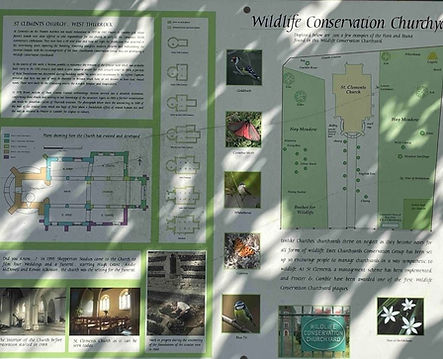
West Thurrock Church St Clements
Steeple Bumpstead (Herkstone) - Messuage
A remarkable charter dating from 1210 provides evidence that the Knights Hospitaller of St John of Jerusalem held lordship over land at medieval Hermested, also written Hormested, Herenested and Hernested, in north-west Essex. The place can be identified with the later Hersted or Herksted, associated today with Herksted Hall and Herksted Green near Steeple Bumpstead. Medieval place-name records show Hernested developing into Herstedehall by 1382, while the Victoria County History identifies Hersted with the later Herksted Hall.
The Hospitaller Estate
The 1210 charter records an agreement between Walter, son of David of Hermested, and Geoffrey de Heliun. Walter leased Geoffrey sixteen acres of land, one acre of meadow and a messuage formerly belonging to Geoffrey Dewy, together with rents and services owed by other tenants.
The most important passage describes the brothers of the Hospital of Jerusalem as the “chief lords of the land”(capitalibus dominis fundi). Geoffrey was required to render 7 shillings and 6 pence each year to the Hospitallers, divided equally between Easter and Michaelmas. The charter therefore demonstrates that by 29 September 1210, the Hospitallers exercised superior lordship over this holding at Hermested.
The document also reveals the layered nature of the estate. William de Hoo and his wife Helewise owed 30 pence annually from part of the former land of Geoffrey Dewy, while William son of Ralph owed a further eight pence. Walter himself possessed additional land at Hernested beyond the seventeen acres being leased, showing that the recorded property formed only part of a larger local estate.
From Hermested to Herksted Hall
The identification of Hermested with modern Herksted is particularly compelling. Later records use the forms Hernested, Hernestede, Hernsted and eventually Herstedehall. By the nineteenth century Herkstead Hall, Herkstead Green and Messings were recognised parts of this landscape; in 1885 they were formally transferred from Birdbrook parish into Steeple Bumpstead.
It cannot yet be proved that the present Herksted Hall site itself was the messuage mentioned in the Hospitaller charter. The document proves Hospitaller lordship over land at Hernested, rather than over the whole later manor. Indeed, by 1253 a manor of Hernested was associated with Drew de Barrington, who received royal permission to hold a market and fair there.
Nevertheless, the evidence places a documented Knights Hospitaller estate in the immediate Herksted/Herksted Hall landscape more than eight centuries ago. The charter offers a rare glimpse of the Order not simply as warriors and religious brothers, but as medieval landowners whose estates were supported by fields, meadow, houses, tenants and annual rents across the Essex
countryside.
STEBBING - St Marys Church
CHAWRETH (Chauree) - Now Broxted - St Marys Church
GESTINTHORPE (ODEWALL Manor)
BOBBLELOUWE - Bobbingworth
ODEWELL
STAUNTON
GREAT SAMFORD - Camera
ASHBROOK - Lands
WENNINGTON - 3 Messuages
FRYERNING - (GYNGES) - St Mary the Virgin Church
Fryerning and Ingatestone were collectively known as Ging-at-the Stone and was given to the Norman Baron Robert de Germon. Later on, his grandson Gilbert Mountfitchet granted half the manor called Ginges, along with the church St Mary's, to the Knights Hospitaller and that part was known as Ging Hospital. It subsequently became known as the Ing of the friars (fryern), referring to its ownership by the Knights Hospitallers, giving rise to the modern name Fryerning
FINCHINGFIELD - Messuage
HACKNEY - Manor Beaullieu
WOODHAM WALTER - St Michael the Archangel Church
RAINHAM - Medieval Village
-
Moor Hall - Owned by the Hospitallers
TOPPESFIELD - Messuage
At Toppesfield, the Knights Hospitaller inherited a dispersed estate formerly held by the Templars, including a messuage, about fifty acres of arable land, three acres of meadow, pasture, and annual rents drawn from properties in Toppesfield and neighbouring villages.
HATFIELD PEVEREL - Messuage
At Hatfield Peverel, the Knights Hospitaller of Little Maplestead held rents, homage and lordship rights over at least nine local tenancies by 1283. These included rights arising from property held by the Benedictine prior, a miller, a clerk, a weaver and other residents. A separate messuage with a valuable marl-pit was held by Reginald de Selverleg, a chaplain closely associated with the Maplestead documentary network, although its eventual transfer to the Hospitallers has not yet been demonstrated.
WITHAM - Messuage
There is a Knight Hospitaller Charter which refers to the Messuage of Witham, in it it reads 'This indenture, made between Brother Walter Grendon, Prior of the Hospital of Saint John of Jerusalem in England, and his fellow brothers, on the one part, and Robert Rikedon and Thomas Birchelegh, on the other, witnesses that:
The aforesaid Prior and brothers, with unanimous consent, have granted permission, for themselves and their successors, to the said Robert and Thomas to give and assign the following property:
-
one messuage;
-
twenty-one acres of land;
-
one and a half acres of meadow;
-
fourteen acres of woodland;
-
and five shillings and two pence of annual rent;
with their appurtenances, in the vills of Witham and Wickham in Essex.
Robert and Thomas held these properties from the Prior and brothers by the service of performing fealty and paying annually eight shillings and nine pence, in return for all services.
They may grant the property to a certain chaplain who shall celebrate divine service in the church of Witham, and to his successors, according to the arrangement made by Robert and Thomas, to have and to hold to the said chaplain and his successors for ever.
The aforesaid chaplain may receive the messuage, lands, woodland and rent, with their appurtenances, from Robert and Thomas and hold them for himself and his successors perpetually, notwithstanding the statute prohibiting land and tenements from being placed in mortmain.
The Prior and brothers declare that neither they nor their successors shall, by reason of the said statute, prosecute, trouble or burden Robert and Thomas or the chaplains of the aforesaid chantry concerning the property in the future.
Nevertheless, all services and customs lawfully and customarily due from the aforesaid messuage, woodland, lands and rent shall remain reserved for ever to the Prior and brothers and their successors.
If the said chantry should become vacant at any time, then the chaplain appointed after each vacancy shall pay the Prior and brothers, or their successors, double the annual rent as a relief.
In testimony of this matter, the Prior and brothers affixed their common seal to the copy of this indenture remaining with Robert and Thomas. Robert and Thomas affixed their seals to the other copy remaining with the Prior and brothers.
Given at Chippenham, during the celebration of our chapter, on the Tuesday immediately following the feast of the Holy Trinity, in the twentieth year of the reign of King Richard II after the Conquest'
MARKSHALL - Messuage
UGLEY - House(s) & Land
UGLEY (medieval Huggele) — Knights Hospitaller holding:
The House of Maplestead possessed a 15-acre agricultural tenement at Ugley, including several houses and other buildings with all appurtenances. It was held from the Hospitallers by Richard de Huggele, son of John Northache, and his heirs for an annual rent of 5 shillings, together with a death-duty of one third of their chattels. The land could not be sold or mortgaged without the permission of the Hospitaller brothers.
HAWKWOOD - Manor
Hawkwood Manor at Sible Hedingham marks the probable centre of the medieval Hauekwode estate. Between c.1242 and 1253 the Knights Hospitaller of Maplestead purchased Geoffrey de Liston's lordship over Walter de Hauekwode and his heirs for four marks, acquiring their homage, tenurial rights, reliefs and escheats. The surviving house is later, but the Hawkwoods name and location on Potter Street can be traced through the medieval records.
LAMBOURNE - St Johns Farm
Hidden among the lanes between Lambourne and Abridge in Essex is St John’s Farm, a name which appears to preserve the memory of an estate once belonging to the Knights Hospitaller of St John of Jerusalem. Medieval charters show that this was not simply a remote field paying rent to the Order. The Hospitallers possessed a genuine landed estate here, complete with a local house, arable land, tenants and manorial rights, administered through their important commandery at Little Maplestead.
How did the Hospitallers acquire the estate?
The Hospitaller property at Lambourne was not created by a single gift. It was assembled from several grants made by local landowners during the 12th and 13th centuries.
Later histories of the manor identify Peter de Valogne (or Valoines) and William de Bois among the principal benefactors whose gifts helped create the estate subsequently known as Lambourne-and-Abridge, and later simply as St John’s.
The precise dates and extent of each of those earliest gifts are not yet clear from the surviving summary evidence, so it would be unsafe to describe either man as having donated the entire later manor. Rather, their lands formed part of a gradually accumulated Hospitaller estate.
By the 13th century, however, there is direct charter evidence that the Order was firmly established here.
The Hospitaller house at Lamburnehel
One particularly revealing Maplestead charter concerns a tenant named Ralph Martin.
Ralph held a piece of arable land from the Hospitallers, described explicitly as:
de feodo predicti hospitalis
“of the fee of the aforesaid Hospital.”
The land lay within his larger field called Erlesland and the Hospitaller parcel itself was called:
Grinelane
It lay beside the hedge of another field called:
Clayfeld
The charter also records that part of the wall running from the solar of Ralph’s house to his gate encroached slightly upon Hospitaller land.
Ralph therefore agreed to pay the Order 6d annually, in three instalments at Easter, Michaelmas and Christmas.
Most importantly, the charter states that if Ralph failed to pay, the brothers could seize his livestock or crops from Erlesland and take them:
ad domum predicti hospitalis apud Lamburnehel
“to the aforesaid House of the Hospital at Lamburnehel.”
That single phrase is crucial.
It proves that the Hospitallers possessed an actual estate house at Lamburnehel, not merely a collection of rents.
What was the Hospitaller house used for?
The domus hospitalis at Lamburnehel appears to have been a working administrative and agricultural centre subordinate to Maplestead.
There is no evidence at present that it functioned as an independent preceptory with its own permanent body of knight-brothers. Instead, it was probably something closer to a Hospitaller manor house, camera or estate farm.
From here the Order could administer:
-
its tenants and rents;
-
agricultural land;
-
woods and pasture;
-
rights of distraint;
-
succession and manorial dues;
-
and the produce generated by the estate.
The Ralph Martin charter demonstrates this in practical terms: seized cattle or crops could actually be driven to the Hospitallers’ house and held there until debts were paid.
The transaction was made under Brother John de Capenore, then Master of Maplestead, confirming that Lamburnehel was being administered through the Maplestead commandery.
What land did the Hospitallers hold?
The complete medieval acreage is not yet recoverable, but the surviving evidence shows that their estate was substantially more than a single farmstead.
The Ralph Martin charter identifies:
Grinelane, Hospitaller arable land; Erlesland, the larger field in which it lay; Clayfeld, an adjoining field; and the House of the Hospital at Lamburnehel.
Later evidence shows that these holdings developed into the manor called Lambourne-and-Abridge, and eventually St John’s.
A post-medieval assessment of the manor in 1608, after it had passed out of Hospitaller ownership, records:
4 messuages, 2 gardens, 100 acres of arable land, 20 acres of meadow, 100 acres of pasture, 80 acres of woodland and 8s annual rent.
That amounts to about 300 acres of specifically described land.
We should not assume that this was the exact acreage held by the Hospitallers in the 13th century—the estate may have expanded or contracted—but it demonstrates the substantial scale into which the medieval property developed.
Where was the Hospitaller estate?
The strongest surviving clue is the name St John’s itself.
The 1841 Lambourne tithe survey records a property called:
St John’s, at approximately Grid reference TQ 470 952
The tithe entry describes:
House, garden, Hoppet etc.
and the associated place-name material explicitly links St John’s with the Knights of St John. The Essex Place-Names Project uses the tithe parcel numbers over later Ordnance Survey mapping specifically to help locate such historic properties.
Nearby was another parcel called: St Johns Croat
showing that the St John’s name was attached not merely to the farmhouse but to the surrounding estate landscape as well.
This makes the later St John’s Farm the strongest candidate for the successor to the medieval Hospitaller estate centre.
St John’s Farm today
The historic name survives at: St Johns Farm, Hoe Lane, Lambourne/Abridge, Essex
The modern address remains St Johns Farm, 120 Hoe Lane, RM4 1AU.
By 1929, when part of the wider Bishops Hall Estate was offered for sale, the property was still described as:
“St John’s Farm with Hillside Cottages”
and contained 161 acres.
That provides a remarkable continuity:
medieval Hospitaller estate
→ Lambourne-and-Abridge manor
→ St John’s manor
→ St John’s homestead on the 1841 tithe map
→ St John’s Farm today.
Is the present farmhouse the medieval Hospitaller house?
That cannot yet be proved.
The modern farm almost certainly lies at or very close to the centre of the former Hospitaller St John’s estate, but no surviving evidence presently allows us to say that the standing farmhouse incorporates the medieval domus hospitalismentioned in Ralph Martin’s charter.
The safest interpretation is therefore:
St John’s Farm probably preserves the site or immediate estate-centre of the Hospitallers’ medieval house at Lamburnehel, although the precise footprint of the 13th-century building remains unidentified.
The nearby Hillside and Clay Pit Field area is also intriguing because it lies close to St John’s and may preserve elements of the medieval landscape described in the charter, although identifying medieval Clayfeld directly with the later Clay Pit Field would currently be speculative.
What happened after the Hospitallers?
The Hospitallers retained the manor until the suppression of their English properties during the Reformation. Later histories record that St John’s passed from the Crown to Richard Morgan and Thomas Carpenter, and subsequently to the Taverner family.
The manor changed hands repeatedly during the following centuries. At one stage the manorial lordship and St John’s Farm became separated, before being reunited in the 19th century.
Despite those changes, the medieval association survived in the place-name.
A surviving memory of the Knights of St John
St John’s Farm is therefore one of the more interesting survivals from the wider network controlled by the Hospitallers of Maplestead.
The estate was assembled from medieval donations, with Peter de Valogne and William de Bois recorded among its early benefactors. By the 13th century the Hospitallers possessed a functioning House of the Hospital at Lamburnehel, surrounded by agricultural land and tenants whose rents and obligations were administered through Maplestead.
The later manor became known simply as St John’s, a name which survived through the tithe survey and remains attached to St John’s Farm on Hoe Lane today.
Although the medieval Hospitaller buildings themselves have not yet been positively identified, the documentary and place-name evidence makes St John’s Farm a compelling modern survival of an estate which helped support the work of the Knights Hospitaller of St John of Jerusalem nearly eight centuries a
UPSHIRE - Messuage
In 1333, John le Schepherde of Upshire, in the parish of Waltham Holy Cross, granted the Hospitaller house at Little Maplestead an annual rent of 2d from a messuage in Upshire. The grant was made for the souls of his ancestors and also carried associated lordship rights, including wardships, marriages, reliefs and escheats. The charter describes the property in unusual detail: it lay between John’s own tenement and the messuage of William le Sawier, with its eastern end fronting the king’s highway and its western end adjoining John’s land. The plot measured 18 feet wide at the road, widening to 30 feet at the rear, and was about 7½ perches long.
The medieval messuage can be placed within the historic settlement of Upshire, now part of Waltham Abbey in Essex. The “king’s highway” is most likely represented by the line of modern Horseshoe Hill, meaning the Hospitaller property probably lay on the western side of that road, within the old linear village. Its exact modern plot has not yet been proven, but the area around the historic Upshire roadside settlement remains the strongest location.
GREAT TOTHAM - Messuage
Great Totham, Essex — Maurice Fitz Robert de Totham, lord of Great Totham, granted the Hospital of St John of Jerusalem the former house-site of William Stabler, together with two acres behind the dwelling and associated access adjoining woodland. Another Hospitaller charter by Maurice explicitly identifies the locality as “magna Toteham” — Great Totham
COLCHESTER - House
STURMER - Messuage & Lands
Robert de Heliun confirmed to the Knights Hospitaller the earlier gift made by his brother William de Heliun of all the former holding of Godwin the smith at Sturmer, including its dwelling-place, meadow and appurtenances, together with a further one rood enclosure lying before the gate of Richard son of Leuric beyond the water. Godwin had formerly held the principal property during the lifetime of Robert and William's father, William de Heliun.
Helions Bumpstead - Messuage
The Knights Hospitaller held a significant estate at Helions Bumpstead in Essex from at least the 12th century, much of it acquired through grants from the local de Heliun family. Their possessions included arable land, meadow, woodland, rents and, importantly, a substantial messuage or residential holding within the medieval vill.
One of the earliest grants concerned the masura, or homestead plot, formerly occupied by Brihtmar the baker, together with an enclosed piece of land. This property was given to the Hospital by Gilbert de Heliun and later confirmed by Robert de Heliun, who was responsible for several further donations to the Order at Bumpstead.
By the 13th century the Hospitallers certainly possessed a more substantial residential property. Adam de Elwell, chaplain, held a messuage and tenement at Bumpstead which was explicitly described as being of the fee of the Hospital of Jerusalem. Adam later surrendered all his rights in the property to the Hospitallers in return for twenty shillings.
The property was subsequently administered from the Hospitaller commandery at Little Maplestead. Brother Robert de Leicester, then master of the Hospitaller house at Maplestead, granted it for life to Edelina, widow of Gilbert de Heliun. The charter describes the holding as a messuage with houses built upon it and associated arable land. Edelina was forbidden from damaging the buildings or trees, and after her death the entire property was to return to the Hospital at Maplestead.
The Hospitallers also retained a separate meadow known as le Innovie, while other charters record numerous acres of farmland elsewhere around Bumpstead. Together these documents show that Helions Bumpstead was more than a collection of scattered Hospitaller fields: the Order possessed a genuine residential and agricultural estate, centred on a messuage with buildings and land, which formed part of the wider network administered from Little Maplestead.
OLMESTED - MESSUAGE
Olmested — 1281: Hospitaller messuage with buildings, three adjoining crofts totalling 6 acres, and 1 rood of meadow in Warburleg. Formerly held by Gilbert de Ponte from William de Swafham; granted by the Hospitallers to Gilbert Rypekon. Rent 2s 6d annually to Maplestead plus one-third of goods at the death of each tenant
By 1281, the Knights Hospitaller held a substantial property at medieval Olmsted or Olmstead, then part of the parish of Helions Bumpstead. The estate was administered from the Hospitaller commandery at Little Maplestead.
A charter dated 20 October 1281 records the Hospitallers granting the property to Gilbert Rypekon. It consisted of a messuage with buildings, three associated crofts containing six acres of land, and one rood of meadow in a place called Warburleg. The crofts lay beside the regale cheminum — the king's highway — while the tenant also enjoyed established rights of access for carts and livestock to the meadow. Gilbert paid the Hospitallers at Maplestead 2s 6d annually, together with a customary payment of one-third of his goods on death.
The messuage had previously been held by Gilbert de Ponte from William de Swafham, although the surviving charter does not tell us exactly when or from whom the Hospitallers originally acquired it. Other thirteenth-century records show that the Order possessed further rents, land and access rights around Olmstead, suggesting that this formed part of a wider Hospitaller estate rather than an isolated holding.
Medieval Olmstead occupied the area around modern Olmstead Green and Olmstead Hall, on the former boundary between Helions Bumpstead and Castle Camps. Archaeological evidence indicates a medieval settlement and moated sites in this landscape. The precise site of the Hospitallers' 1281 messuage has not yet been identified, and no surviving building can presently be securely linked to it. The present Olmstead Hall is principally a later, sixteenth-century building, although it occupies a much older medieval landscape.
